Top 10 Biggest Deserts on Earth You Must See in 2026
Published: 13 May 2026
In 2026, deserts continue to be some of the most fascinating and extreme natural landscapes on Earth, stretching across massive regions with sand dunes, rocky plains, and even frozen ice fields. While many people imagine deserts as hot and dry places, some of the world’s largest deserts are actually covered with snow and ice. From the endless Sahara Desert in Africa to the icy Antarctic region, these environments are known for their harsh climates, unique wildlife, and breathtaking scenery.
Many of the world’s top deserts attract travelers, photographers, scientists, and adventure lovers because of their natural beauty and unique conditions. These desert regions are also important for Earth’s climate, ecosystems, and scientific research. Whether you are interested in hot deserts, cold deserts, or famous natural wonders, each destination offers a completely different experience.
In this 2026 guide, we will explore the top 10 largest deserts in the world and learn what makes these massive desert landscapes so unique and important.
Now, let’s explore the largest deserts on Earth in detail and discover what makes each one unique among the top deserts in the world.
Top 10 Largest Deserts in the World
Deserts are some of the most extreme and fascinating landscapes on Earth. From icy polar deserts to massive sandy regions, these natural wonders cover millions of square kilometers and are home to unique wildlife, cultures, and environments.
Here is the list of the Top 10 Largest Deserts in the World:
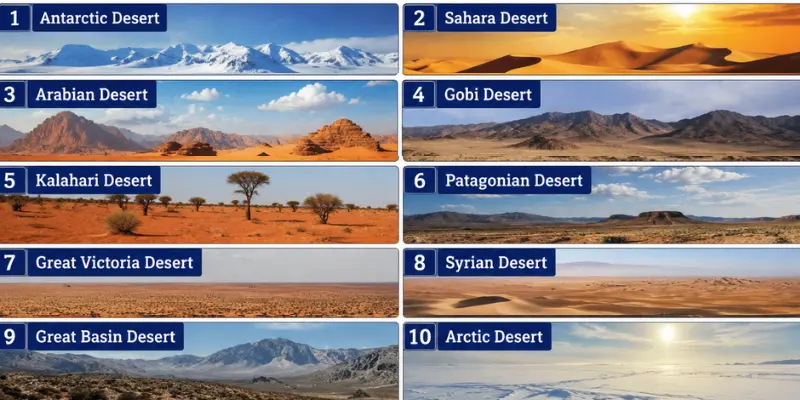
- Antarctic Desert
- Sahara Desert
- Arabian Desert
- Gobi Desert
- Kalahari Desert
- Patagonian Desert
- Great Victoria Desert
- Syrian Desert
- Great Basin Desert
- Arctic Desert
Now, let’s explore the largest deserts of the world one by one.
1. Antarctic Desert
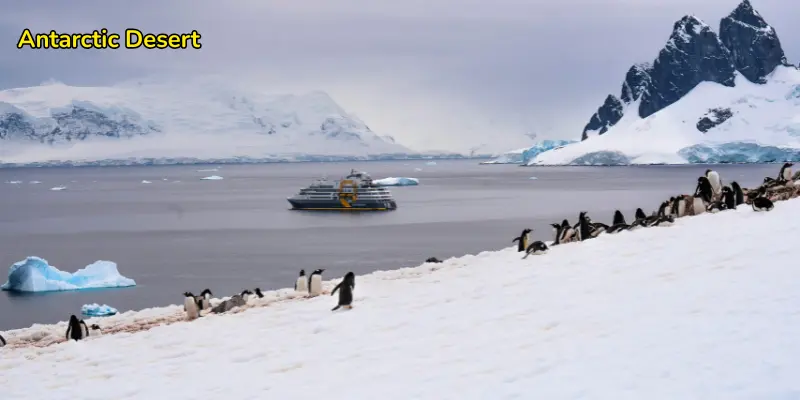
The Antarctic Desert is the largest desert in the world and is known for its extreme cold, ice-covered landscape, and importance in scientific research. It is a unique natural region where almost everything is covered in thick ice, yet it is still classified as a desert due to very low rainfall.
Location and Size
The Antarctic Desert is located in Antarctica around the South Pole. It covers about 14 million square kilometers, making it the largest desert on Earth. Despite being covered in ice, it is still considered a desert because of its extremely low precipitation levels.
Why This Desert is Famous
The Antarctic Desert is famous for being the largest cold desert in the world. It is known for its massive ice sheets, extreme weather conditions, and its important role in climate and environmental research.
Climate and Environment
Antarctica has one of the harshest climates on Earth, with temperatures often dropping below -50°C. It receives very little snowfall and experiences long periods of darkness and strong winds.
Wildlife and Nature
Even in this freezing environment, some animals survive, including penguins, seals, and seabirds. Most of the biodiversity exists in the surrounding ocean waters.
Interesting Facts
The Antarctic Desert is one of the most extreme and scientifically important regions on Earth.
- It contains about 70% of the world’s freshwater in the form of ice.
- It is the coldest continent on Earth.
- No permanent human population lives here.
- It has international research stations from many countries.
- It receives very little precipitation, making it a true desert.
The Antarctic Desert is a frozen wonderland that shows how life and science can exist even in the most extreme conditions on Earth.
2. Sahara Desert
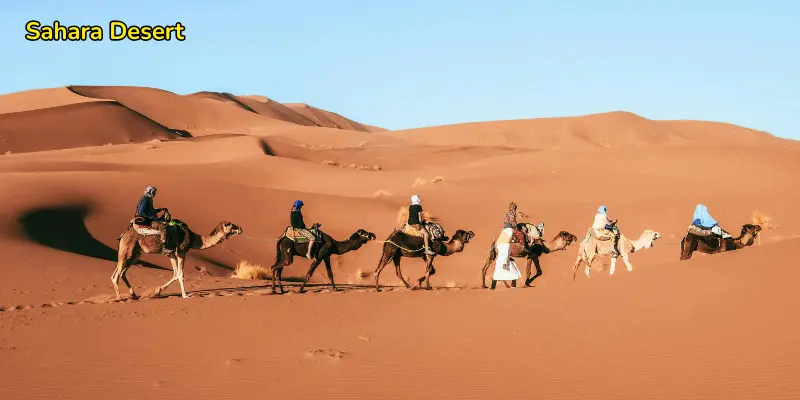
The Sahara Desert is the largest hot desert in the world and is known for its endless sand dunes, extreme heat, and stunning landscapes. It is one of the most famous deserts on Earth and covers a huge part of North Africa. The desert is rich in natural beauty, unique ecosystems, and ancient trade history, making it an important region for geography and culture.
Location and Size
The Sahara Desert spans North Africa and extends across multiple countries, including Algeria, Egypt, Libya, Sudan, and Morocco. It covers around 9 million square kilometers, making it the largest hot desert on Earth.
Why This Desert is Famous
This desert is famous for its vast sand dunes, scorching temperatures, and historical trade routes. It is also known for its unique desert life and dramatic landscapes that attract researchers and travelers.
Climate and Environment
The Sahara has an extremely hot and dry climate. Daytime temperatures can exceed 45°C, while nights can become surprisingly cold. Rainfall is very rare, making it one of the driest regions in the world.
Wildlife and Nature
Despite harsh conditions, the Sahara is home to animals like camels, desert foxes, lizards, and snakes. Plants are also adapted to survive with very little water.
Interesting Facts
The Sahara Desert is a fascinating natural wonder known for its extreme conditions and rich history.
- It is the largest hot desert in the world, covering about 9.2 million square kilometers.
- Around 6,000–10,000 years ago, it had lakes, rivers, and green landscapes.
- It spans across 11 countries in North Africa.
- Temperatures can reach above 50°C during the day and drop to near 0°C at night.
- The Sahara is slowly expanding due to desertification.
The Sahara Desert is a powerful example of nature’s extremes, showing how life and landscapes adapt to one of the harshest environments on Earth.
3. Arabian Desert
The Arabian Desert is one of the largest deserts in the world and is known for its vast sand dunes, extreme heat, and rich desert culture. It covers most of the Arabian Peninsula and plays an important role in the geography, history, and lifestyle of the Middle East.

Location and Size
The Arabian Desert is located in the Middle East and spreads across countries such as Saudi Arabia, Oman, Yemen, Iraq, Jordan, and the United Arab Emirates. It covers around 2.3 million square kilometers, making it one of the largest deserts in the world.
Why This Desert is Famous
This desert is famous for its massive sand dunes, oil-rich region, and historical trade routes. It is also known for its unique desert culture and Bedouin lifestyle.
Climate and Environment
The Arabian Desert has a very hot and dry climate. Day temperatures can exceed 50°C in some areas, while nights can be much cooler. Rainfall is very rare and unpredictable.
Wildlife and Nature
Despite extreme conditions, animals like camels, Arabian oryx, foxes, and reptiles survive here. Plants are adapted to conserve water and survive long dry periods.
Interesting Facts
The Arabian Desert is one of the most important and extreme desert regions in the world, known for its vast size, harsh climate, and rich natural resources.
- It is the second-largest hot desert in the world, covering about 2.3 million square kilometers.
- It spans most of the Arabian Peninsula, including Saudi Arabia and surrounding countries.
- The Rub’ al Khali (Empty Quarter) is one of the largest continuous sand deserts in the world.
- Temperatures can reach up to 50°C or more in summer, making it extremely hot.
- The region contains some of the world’s largest oil and natural gas reserves.
The Arabian Desert is a unique blend of natural extremes and rich cultural history, making it one of the most fascinating deserts on Earth.
4. Gobi Desert
The Gobi Desert is one of the largest and most famous deserts in Asia, known for its harsh climate, rocky landscapes, and extreme temperature changes. Unlike sandy deserts, much of the Gobi is covered with gravel, rocks, and bare land, making it a unique desert environment with rich historical and geological importance.
Location and Size
The Gobi Desert is located in East Asia and spreads across northern China and southern Mongolia. It covers around 1.3 million square kilometers, making it one of the largest deserts in the world and the largest desert in Asia.
Why This Desert is Famous
The Gobi Desert is famous for its extreme climate, dinosaur fossil discoveries, and its role in the ancient Silk Road trade route. It is also known for its unique rocky terrain instead of soft sand dunes.
Climate and Environment
The Gobi has a harsh continental climate with very hot summers and extremely cold winters. Temperatures can range from above 40°C in summer to below -30°C in winter. Rainfall is very low, making it a true desert environment.
Wildlife and Nature
Despite extreme conditions, animals like Bactrian camels, snow leopards, wolves, and gazelles survive here. Plants are sparse but highly adapted to dry and cold conditions.
Interesting Facts
The Gobi Desert is one of the most unique deserts in the world, known for its harsh climate, rocky terrain, and important role in history and science.
- It is the largest desert in Asia, covering about 1.3 million square kilometers.
- The Gobi is a cold desert, meaning it can have freezing winters and hot summers.
- Temperatures can drop below -30°C in winter and rise above 40°C in summer.
- It lies along the historic Silk Road trade route between China and Central Asia.
- The desert is famous for dinosaur fossil discoveries, including eggs and skeletons.
The Gobi Desert is a remarkable landscape of extremes, offering a mix of history, fossils, and unique desert life found nowhere else on Earth.
5. Kalahari Desert
The Kalahari Desert is a large semi-arid desert in Southern Africa, known for its red sand dunes, unique wildlife, and rich indigenous culture. Unlike a completely dry desert, the Kalahari receives seasonal rainfall, which allows grasses and some vegetation to grow, supporting a variety of animals and human life.
Location and Size
The Kalahari Desert is located in Southern Africa and spreads across Botswana, Namibia, and South Africa. It covers around 900,000 square kilometers, making it one of the largest deserts in Africa.
Why This Desert is Famous
The Kalahari is famous for its red sand dunes, wildlife diversity, and the traditional lifestyle of the San people (Bushmen), who have lived in this region for thousands of years.
Climate and Environment
The Kalahari has a semi-arid climate with hot summers and mild winters. It receives more rainfall than true deserts but still remains dry overall. Temperatures can be very high during the day.
Wildlife and Nature
This desert is home to a wide range of animals, including lions, cheetahs, meerkats, giraffes, antelopes, and hyenas. Many species have adapted to survive long dry seasons.
Interesting Facts
The Kalahari Desert is a large semi-arid region in Southern Africa, known for its red sand, wildlife, and unique ecosystem that supports both desert and grassland life.
- It covers around 900,000 square kilometers across Botswana, Namibia, and South Africa.
- It is a semi-arid desert, meaning it receives more rainfall than true deserts but is still very dry overall.
- The Okavango Delta, one of the world’s largest inland deltas, lies on its edge and brings seasonal water to the region.
- It is home to indigenous San (Bushmen) communities, who have lived there for thousands of years.
- The region supports diverse wildlife, including lions, meerkats, cheetahs, and antelopes.
The Kalahari Desert is a beautiful mix of desert and grassland, showing how life can thrive even in harsh, dry environments.
6. Patagonian Desert
The Patagonian Desert is one of the largest deserts in South America, known for its cold climate, strong winds, and vast dry plains. It is a cold winter desert that stretches across a remote and scenic region, offering unique landscapes and rich natural diversity.
Location and Size
The Patagonian Desert is located in South America, mainly in Argentina, extending into parts of Chile. It covers around 670,000 square kilometers, making it the largest desert in Argentina and one of the largest cold deserts in the world.
Why This Desert is Famous
This desert is famous for its strong winds, unique cold desert environment, and dramatic landscapes. It is also known for its fossils, natural reserves, and wide open plains.
Climate and Environment
The Patagonian Desert has a cold and dry climate. Winters are cold, and summers are mild. It is one of the windiest regions in the world, and rainfall is very low due to the Andes Mountains’ rain shadow.
Wildlife and Nature
Despite harsh conditions, animals like guanacos, foxes, armadillos, and rheas live here. The region also has unique plants adapted to dry and windy conditions.
Interesting Facts
The Patagonian Desert has several unique and scientifically important features.
- It is one of the largest rain-shadow deserts in the world.
- Wind speeds in some areas can regularly exceed 100 km/h.
- It contains important oil and gas reserves in certain regions.
- Many areas remain almost untouched by human settlement due to harsh conditions.
- It has large fossil beds that help scientists study prehistoric life.
The Patagonian Desert is a vast, windy, cold desert that showcases the natural extremes of South America’s landscape.
7. Great Victoria Desert
The Great Victoria Desert is Australia’s largest desert, known for its red sand dunes, rocky plains, and extremely dry climate. It is a remote and sparsely populated region that plays an important role in Australia’s natural ecosystem and indigenous culture.
Location and Size
The Great Victoria Desert is located in southern and western Australia, mainly across Western Australia and South Australia. It covers about 348,000 square kilometers, making it the largest desert in Australia.
Why This Desert is Famous
This desert is famous for its red sand landscape, remote wilderness, and rich Aboriginal heritage. It is also known for being one of the least populated areas in Australia.
Climate and Environment
The climate is very hot and dry, with extremely low rainfall throughout the year. Summers are intense, while winters are mild. Water sources are rare and scattered.
Wildlife and Nature
Animals such as dingoes, red kangaroos, reptiles, and various bird species survive here. Vegetation mainly consists of spinifex grass and drought-resistant shrubs.
Interesting Facts
The Great Victoria Desert has unique natural and cultural significance.
- It is the largest desert in Australia.
- Large parts of it are protected as conservation areas.
- It is home to several Aboriginal communities and sacred sites.
- Some areas are used for scientific research and military testing due to isolation.
- Despite harsh conditions, it supports specially adapted desert wildlife.
The Great Victoria Desert is a vast and remote landscape that reflects Australia’s harsh beauty and deep natural heritage.
9. Syrian Desert
The Syrian Desert is a vast arid region in the Middle East, known for its rocky plains, dry climate, and historical importance. It connects several countries and has been an important route for ancient trade and migration.
Location and Size
The Syrian Desert is located in the Middle East and spreads across Syria, Iraq, Jordan, and Saudi Arabia. It covers about 500,000 square kilometers and forms part of the larger Arabian Desert system.
Why This Desert is Famous
This desert is famous for its historical trade routes, ancient ruins, and harsh desert environment. It has been an important passageway for caravans for centuries.
Climate and Environment
The climate is hot and dry with very low rainfall. Summers are extremely hot, while winters can be cold, especially at night.
Wildlife and Nature
Animals such as desert foxes, gazelles, lizards, and snakes are found here. Vegetation is very sparse, consisting mainly of desert shrubs.
Interesting Facts
The Syrian Desert has important historical and geographical significance.
- It forms a natural link between the Arabian Peninsula and the Fertile Crescent.
- It has been used as a trade and pilgrimage route for centuries.
- Large parts remain uninhabited due to extreme dryness.
- It is part of the larger Arabian Desert ecosystem.
- It contains ancient archaeological sites and ruins.
The Syrian Desert is a historically rich desert region that has played a key role in trade, travel, and civilization in the Middle East.
9. Great Basin Desert
The Great Basin Desert is a cold desert located in North America, known for its high elevation, unique climate, and basin-and-range landscape. It is one of the most distinctive deserts in the United States.
Location and Size
The Great Basin Desert is located in the western United States, mainly covering Nevada and parts of Utah, Oregon, and Idaho. It covers about 492,000 square kilometers.
Why This Desert is Famous
This desert is famous for its cold desert climate, mountain ranges, and salt flats. It is also known for its unique geological formations.
Climate and Environment
The climate is a cold desert type, with hot summers and cold winters. Precipitation is low and mostly occurs as snow in higher elevations.
Wildlife and Nature
Animals such as pronghorns, jackrabbits, coyotes, and mountain lions live here. Plant life includes sagebrush and other drought-resistant vegetation.
Interesting Facts
The Great Basin Desert has unique scientific and geographical features.
- It is the largest cold desert in the United States.
- It is the only “true cold desert” in North America.
- It has no drainage to the ocean (endorheic basin system).
- Death Valley lies on its edge, one of the hottest places on Earth.
- It contains several protected national parks and monuments.
The Great Basin Desert is a unique cold desert that showcases dramatic landscapes and extreme seasonal climate variations.
10. Arctic Desert
The Arctic Desert is one of the largest deserts in the world and is located around the North Pole. It is a cold desert, mostly covered in ice, snow, and frozen ground. Despite its freezing conditions, it is classified as a desert because it receives very little precipitation throughout the year.
Location and Size
The Arctic Desert is located in the Arctic region, spanning parts of Canada, Russia, Greenland, Norway, and Alaska (USA). It spans around 14 million square kilometers, making it one of the largest deserts on Earth.
Why This Desert is Famous
This desert is famous for its extreme cold conditions, polar wildlife, and unique ice-covered landscapes. It is also important for climate studies and global environmental research.
Climate and Environment
The Arctic Desert has extremely low temperatures, often dropping below -40°C in winter. It experiences long polar nights and short summers. Precipitation is very low, mostly in the form of snow.
Wildlife and Nature
Animals such as polar bears, Arctic foxes, walruses, seals, and reindeer survive in this harsh environment. Many species are specially adapted to survive freezing temperatures.
Interesting Facts
The Arctic desert is a unique and extreme polar environment with many important scientific features.
- It is one of the largest cold deserts in the world.
- It includes parts of the Arctic Ocean and surrounding landmasses.
- Polar bears are among its top predators.
- It experiences 24-hour daylight in summer and darkness in winter.
- It plays a major role in regulating Earth’s climate system.
The Arctic Desert is a frozen wilderness that shows the extreme conditions of the North Pole and the resilience of life in icy environments.
Conclusion
So guys, I hope you now have a clear understanding of the top 10 largest deserts in the world and what makes each of them unique. From the freezing polar deserts of the Arctic and Antarctic to the hot, sandy regions of the Sahara and Arabian deserts, each shows a different face of Earth’s extreme environments.
These deserts are not just empty lands — they are full of natural wonders, rare wildlife, unique climates, and important scientific value. Some are rich in history and ancient trade routes, while others help scientists understand climate change and Earth’s ecosystem.
My personal recommendation is to learn about the Antarctic and Sahara deserts first, as they are the most extreme and famous deserts in the world. If you are interested in unique landscapes, the Gobi and Kalahari deserts will surprise you with their distinct climates and wildlife.
No matter which desert you explore, each one gives a powerful lesson about how nature survives in extreme conditions and how diverse our planet truly is.
For more amazing travel and destination guides, you can also explore the travel destination website.
FAQs about the largest desert on Earth
The Antarctic Desert is the largest desert in the world by area. It covers around 14 million square kilometers and is a cold desert mostly covered in ice.
The Sahara Desert is the largest hot desert in the world. It is located in North Africa and is famous for its extreme heat and vast sand dunes.
The Arabian Desert is considered the second-largest hot desert in the world. It covers most of the Arabian Peninsula and has very harsh, dry conditions.
The Gobi Desert is often ranked as the third-largest hot desert. It is a cold desert in Asia, known for its extreme temperature variations.
The Sahara Desert is the third-largest desert in the world after the Antarctic and Arctic deserts. It is the largest hot desert, covering much of North Africa.
Different deserts have different animals like camels, foxes, penguins, seals, and reptiles. These animals are specially adapted to survive extreme conditions.



- Be Respectful
- Stay Relevant
- Stay Positive
- True Feedback
- Encourage Discussion
- Avoid Spamming
- No Fake News
- Don't Copy-Paste
- No Personal Attacks
- Be Respectful
- Stay Relevant
- Stay Positive
- True Feedback
- Encourage Discussion
- Avoid Spamming
- No Fake News
- Don't Copy-Paste
- No Personal Attacks
