Longest Rivers in the World – Length, Facts & Importance 2026
Published: 8 May 2026
The longest rivers in the world have played an important role in shaping civilizations, trade routes, and natural ecosystems for thousands of years. These massive waterways flow through multiple countries and support millions of people with water, farming, transportation, and wildlife. From the Nile in Africa to the Amazon in South America, some of the world’s largest rivers are known for their immense length, natural beauty, and historical significance.
In this guide, we will explore the Top 10 Longest Rivers in the World, including their real lengths, water flow, geographic importance, and the unique features that make each river important for nature, history, and daily life.
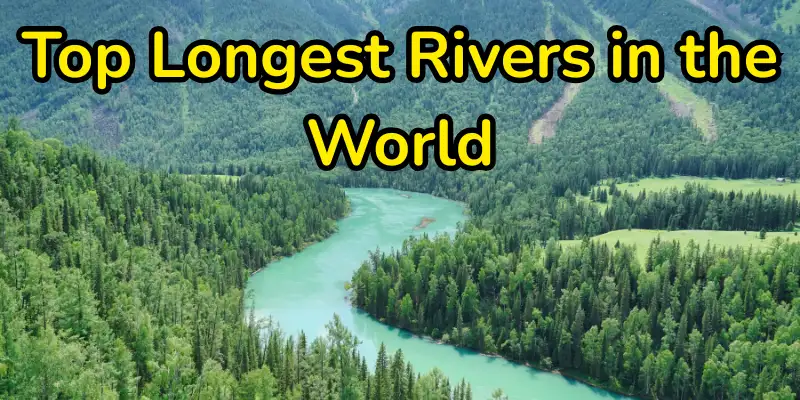
Now, let’s explore the world’s largest rivers in detail and see why they are considered some of the most important waterways on Earth.
Top 10 Longest Rivers in the World
The longest rivers in the world are powerful natural water systems. They flow across continents and connect different countries. These rivers are a major source of fresh water for daily life and agriculture. They also support trade, energy production, and transport in many regions. Many of these rivers also host diverse wildlife and unique ecosystems.
Here is the list of the world’s longest rivers, ranked by estimated length and global significance.
- Nile River
- Amazon River
- Yangtze River
- Mississippi–Missouri River System
- Yenisei River
- Yellow River
- Ob–Irtysh River
- Paraná River
- Congo River
- Amur River
So, let’s explore these massive rivers one by one.
1. Nile River
The Nile River is located in northeastern Africa and is widely recognized as the longest river in the world. It flows across multiple countries before reaching the Mediterranean Sea, playing a vital role in both history and modern life.
Where the Nile River Is Located
The Nile River flows through northeastern Africa and passes through:
- Uganda
- South Sudan
- Sudan
- Egypt
It originates mainly from tributaries linked to Lake Victoria and Lake Tana region, and finally drains into the Mediterranean Sea.
Length and Volume (Geographic Importance)
The Nile River is one of the most studied rivers in the world due to its scale and impact.
- Length: approximately 6,650 km
- Water flow (average discharge): about 2,830 cubic meters per second
- One of the longest rivers globally by length
- Moderate water volume compared to the Amazon River
It plays a crucial role in supporting agriculture and freshwater supply in arid regions of Africa.
Why the Nile River Is Famous
The Nile River is deeply connected with human civilization and history.
- Ancient Egyptian civilization developed along its banks
- Provided fertile land for farming in desert regions
- Served as a major transport and trade route in ancient times
Wildlife and Natural Beauty Around the Nile
The river supports a rich ecosystem along its course.
- Nile crocodiles
- Fish species used for local fishing
- Herons, kingfishers, and migratory birds
- Wetlands and green riverbanks in dry regions
Interesting Facts About the Nile River
- It flows northward, which is unusual for major rivers
- It has supported human civilization for thousands of years
- It remains a lifeline for agriculture and drinking water
The Nile River is a powerful natural and historical landmark that continues to support life, agriculture, and ecosystems across northeastern Africa.
2. Amazon River
The Amazon River is located in South America and is considered one of the most powerful and largest river systems in the world. It flows mainly through Brazil and is surrounded by the world’s largest rainforest, the Amazon Rainforest. This river plays a major role in global climate, biodiversity, and water flow.
Where the Amazon River Is Located
The Amazon River flows through northern South America and mainly passes through:
- Peru
- Colombia
- Brazil
It starts from the Andes Mountains in Peru and flows eastward until it reaches the Atlantic Ocean in Brazil.
Length and Volume (Geographic Importance)
The Amazon River is known for its extreme water flow and massive size.
- Length: approximately 6,400 km (around 4,000 miles)
- Water flow (average discharge): about 209,000 cubic meters per second
- The largest river in the world by water volume
- Second-longest river in the world (by some measurements)
It carries more water than any other river on Earth combined.
Why the Amazon River Is Famous
The Amazon River is globally famous for its size and biodiversity.
- Surrounded by the Amazon Rainforest
- Supports the richest ecosystem on Earth
- Important for the global oxygen and climate balance
- Used for transport in remote forest areas
Wildlife and Natural Beauty Around the Amazon
The Amazon River is home to some of the world’s most unique wildlife.
- Pink river dolphins
- Piranhas
- Anacondas
- Jaguar habitat is near the rainforest
- Thousands of fish and insect species
- Dense tropical forest ecosystem
Interesting Facts About the Amazon River
- It carries more water than any other river in the world
- Some parts are so wide they look like seas
- It has thousands of tributaries feeding into it
- Many species here are still undiscovered
The Amazon River is a natural wonder of the world that supports the richest biodiversity and plays a vital role in maintaining Earth’s ecological balance.
3. Yangtze River
The Yangtze River is located in China and is the longest river in Asia. It plays a major role in the country’s agriculture, transport system, economy, and daily life. The river flows through many important provinces and connects rural areas with major industrial cities.
Where the Yangtze River Is Located
The Yangtze River flows entirely within China and passes through:
- Qinghai Province (source region)
- Tibet Plateau areas
- Sichuan Province
- Hubei Province
- Jiangsu Province
- Shanghai (river mouth)
It starts from the Tibetan Plateau and ends in the East China Sea.
Length and Volume (Geographic Importance)
The Yangtze River is one of the most important rivers in the world due to its size and water system.
- Length: approximately 6,300 km
- Average water discharge (volume): about 30,000 cubic meters per second
- The largest river in Asia by water flow
- The third-longest river in the world
It is a key water source for industries, farming, and millions of people.
Why the Yangtze River Is Famous
The Yangtze River is famous for its strong economic and cultural importance in China.
- Supports ancient and modern Chinese civilization
- Connects major cities like Wuhan and Shanghai
- Important for shipping and inland trade routes
- Home to the Three Gorges Dam, one of the largest hydroelectric projects
Wildlife and Natural Beauty Around the Yangtze
The river supports diverse but sensitive ecosystems.
- Finless porpoise
- Chinese alligator (rare species)
- Freshwater fish species
- Migratory birds in wetland areas
- Mountain and valley landscapes
Interesting Facts About the Yangtze River
- It is the longest river in Asia
- It supports more than 400 million people
- It has one of the world’s largest hydroelectric dams (Three Gorges Dam)
The Yangtze River is a vital natural and economic lifeline for China, supporting people, industries, and ecosystems across its vast basin.
4. Mississippi, Missouri River System
The Mississippi–Missouri River System is located in the United States and is considered one of the longest and most important river systems in North America. It plays a key role in transportation, agriculture, and economic development across the central United States.
Where the Mississippi–Missouri River System Is Located
This river system flows through the central and eastern United States.
- The Missouri River starts in the Rocky Mountains (Montana)
- The Mississippi River begins in Lake Itasca (Minnesota)
- The system flows through multiple states, including:
- Minnesota
- Missouri
- Illinois
- Kentucky
- Louisiana
It finally drains into the Gulf of Mexico.
Length and Volume (Geographic Importance)
This river system is massive when both rivers are combined.
- Total length: approximately 6,275 km
- One of the longest river systems in the world
- Average discharge: about 16,800 cubic meters per second
- Largest drainage basin in North America
It supports agriculture, trade routes, and inland transportation across the United States.
Why the Mississippi–Missouri River System Is Famous
This river system is highly important in American history and economy.
- Key transportation route for goods and agriculture
- Supported early Native American civilizations
- Played a major role in U.S. expansion and trade development
- Connects major industrial and farming regions
Wildlife and Natural Beauty Around the River System
The river supports rich biodiversity along its long route.
- Catfish and freshwater fish species
- American alligators in the southern regions
- Bald eagles and migratory birds
- Wetlands and floodplain forests
- Deer and riverbank wildlife
Interesting Facts About the Mississippi–Missouri River System
- It forms the longest river system in North America
- It drains about 40% of the United States
- It has played a major role in U.S. history and trade development
The Mississippi–Missouri River System is a powerful water network that continues to support transportation, agriculture, and ecosystems across the heart of the United States.
6. Yellow River
The Yellow River, also known as the Huang He, is located in China and is often called the “cradle of Chinese civilization.” It is one of the most historically important rivers in the world because early Chinese societies developed along its fertile basin.
Where the Yellow River Is Located
The Yellow River flows entirely within China and passes through several provinces:
- Qinghai Province (origin)
- Gansu Province
- Ningxia
- Inner Mongolia
- Shanxi
- Henan
- Shandong (mouth area)
It starts from the Bayan Har Mountains and flows eastward into the Bohai Sea.
Length and Geographic Importance
The Yellow River is a major river in Asia with strong cultural and agricultural value.
- Length: approximately 5,464 km
- One of the longest rivers in China
- Known for carrying large amounts of sediment (loess soil)
- Important for agriculture and irrigation
The river has changed course many times in history due to flooding and sediment buildup.
Why the Yellow River Is Famous
The Yellow River is famous for its deep connection with Chinese history.
- Birthplace of ancient Chinese civilization
- Supported early farming communities
- Known for frequent floods in history
- Played a key role in the cultural development of China
Wildlife and Natural Beauty Around the Yellow River
Although heavily used by humans, the river still supports natural ecosystems.
- Carp and freshwater fish species
- Migratory birds in wetland areas
- Riverbank vegetation in upper regions
- Grassland and plateau landscapes
Interesting Facts About the Yellow River
- It is called “Yellow” because of the yellow silt it carries
- It has been called the “Sorrow of China” due to historical floods
- It is one of the most sediment-heavy rivers in the world
The Yellow River is a historic lifeline of China that shaped one of the world’s oldest civilizations and continues to support agriculture and life across its basin.
7. Ob–Irtysh River
The Ob–Irtysh River system is located in Russia and parts of Kazakhstan and is one of the major river systems in Siberia. It is formed by two main rivers, the Ob River and its largest tributary, the Irtysh River. This system plays an important role in regional water supply, transportation, and hydroelectric power.
Where the Ob–Irtysh River Is Located
This river system flows through central and western Siberia.
- The Irtysh River originates in the Altai Mountains (China/Mongolia region)
- The Ob River forms in the Altai region of Russia
- Passes through Kazakhstan and Russia
- Ends in the Kara Sea (Arctic Ocean)
It is one of the longest river systems in the world, flowing into the Arctic.
Length and Geographic Importance
The Ob–Irtysh system is among the largest river networks globally.
- Total length: approximately 5,410 km
- Large drainage basin covering Siberia and Central Asia
- Important Arctic Ocean river system
- Supports cold-region ecosystems and settlements
It plays a key role in Siberia’s geography and water cycle.
Why the Ob–Irtysh River Is Famous
The river system is well known for its size and economic importance in cold regions.
- Important transportation route during ice-free months
- Supports fishing and local industries
- Provides hydroelectric power in certain regions
- Crucial water source for Siberian settlements
Wildlife and Natural Beauty Around the River
The river flows through cold forests, wetlands, and tundra regions.
- Sturgeon and freshwater fish species
- Beavers and Siberian mammals
- Migratory birds in the summer season
- Taiga forests along riverbanks
- Frozen landscapes in winter
Interesting Facts About the Ob–Irtysh River
- It is one of the longest river systems in the world
- Large parts of the river freeze during the winter months
- It supports both the European and Asian Russia regions
The Ob–Irtysh River system is a vital Siberian water network that supports nature, energy, and communities across one of the world’s coldest regions.
8. Paraná River
The Paraná River is located in South America and is one of the continent’s most important river systems. It flows through three major countries and plays a key role in agriculture, hydroelectric power, and transportation.
Where the Paraná River Is Located
The Paraná River flows through central South America and passes through:
- Brazil
- Paraguay
- Argentina
It is formed by the joining of rivers in Brazil and flows southward until it meets the Uruguay River and forms the Río de la Plata estuary.
Length and Geographic Importance
The Paraná River is one of the major river systems in South America.
- Length: approximately 4,880 km
- Average water discharge (volume): about 17,000 cubic meters per second
- The second-longest river in South America after the Amazon
- Large drainage basin supporting agriculture and ecosystems
It plays a major role in irrigation and hydroelectric power generation
Why the Paraná River Is Famous
The Paraná River is famous for its economic and energy importance.
- Home to major hydroelectric dams like Itaipu Dam
- Supports agriculture in Brazil, Paraguay, and Argentina
- Important waterway for cargo transport
- Connects inland regions to the Atlantic Ocean
Wildlife and Natural Beauty Around the Paraná River
The river supports diverse ecosystems across tropical and subtropical regions.
- Freshwater fish species like dorado and catfish
- Capybaras and river mammals
- Caiman (crocodile-like reptiles)
- Wetlands and marshlands (especially in the Pantanal region)
- Migratory birds
Interesting Facts About the Paraná River
- It hosts one of the world’s largest hydroelectric power plants (Itaipu Dam)
- It forms part of the second-largest river basin in South America
- It is a major inland navigation route for cargo ships
The Paraná River is a powerful South American river system that supports energy production, agriculture, and biodiversity across three major countries.
9. Congo River
The Congo River is located in Central Africa and is one of the world’s most powerful river systems. It is especially known for being the deepest river on Earth and for supporting the dense Congo Rainforest, which is one of the most biodiverse regions globally.
Where the Congo River Is Located
The Congo River flows through Central Africa and passes through:
- Democratic Republic of the Congo
- Republic of the Congo
- Angola (border region in parts)
It originates in the highlands and flows westward into the Atlantic Ocean.
Length and Volume (Geographic Importance)
The Congo River is extremely powerful in terms of water flow.
- Length: approximately 4,700 km
- Average water discharge (volume): about 41,000 cubic meters per second
- Second-largest river in the world by water volume (after the Amazon)
- The deepest river in the world
Its strong flow makes it one of the most important rivers in Africa.
Why the Congo River Is Famous
The Congo River is famous for its depth, strength, and its connection to the rainforest.
- Supports the Congo Rainforest ecosystem
- An important transportation route in Central Africa
- One of the deepest rivers globally
- Plays a major role in the regional hydropower potential
Wildlife and Natural Beauty Around the Congo
The river flows through one of the richest ecosystems on Earth.
- Forest elephants
- Gorillas and chimpanzees in the nearby rainforest
- Freshwater fish species
- Crocodiles and river reptiles
- Dense tropical jungle biodiversity
Interesting Facts About the Congo River
- It is the deepest river in the world, reaching over 220 meters in some places
- It crosses the equator twice
- It has some of the strongest river currents on Earth
The Congo River is a powerful natural system that supports Central Africa’s rainforest, wildlife, and communities while holding the title of the deepest river in the world.
10. Amur River
The Amur River is located in East Asia and forms a natural border between Russia and China. It is one of the major river systems in the region and is known for its long flow, seasonal climate changes, and rich biodiversity.
Where the Amur River Is Located
The Amur River flows through northeastern Asia and passes along:
- Russia (Siberia region)
- China (northeastern provinces)
It is formed by the joining of the Shilka and Argun rivers and flows eastward into the Sea of Okhotsk.
Length and Geographic Importance
The Amur River is an important boundary and ecosystem river.
- Length: approximately 4,444 km
- The major border river between Russia and China
- Supports diverse cold and temperate ecosystems
- Important for fishing and the regional water supply
Why the Amur River Is Famous
The Amur River is well known for its geopolitical and natural importance.
- Forms a long natural border between the two countries
- Important for regional trade and fishing communities
- Supports wildlife in remote forest regions
- Experiences strong seasonal climate changes (frozen winters)
Wildlife and Natural Beauty Around the Amur
The river supports both forest and wetland ecosystems.
- Amur tiger (rare and endangered)
- Sturgeon and salmon species
- Migratory birds
- Forest mammals like deer and bears
- Wetlands and river plains
Interesting Facts About the Amur River
- It forms one of the longest border rivers in the world
- It freezes during winter in many regions
- It is home to the rare Amur tiger
The Amur River is a vital East Asian river system that supports biodiversity, borders, and livelihoods while showcasing some of the region’s most unique wildlife.
Conclusion
So guys, you now understand the longest rivers in the world in detail, including their locations, lengths, volumes, wildlife, and their importance to human life. These rivers are not just water flows; they are lifelines that support millions of people, nature, agriculture, and economies across different continents.
Each river we discussed has its own unique identity. Some are famous for their extreme length, while others are known for their massive water volume or historical importance. From the Nile to the Amazon, and from the Yangtze to the Congo, every river tells a different story of nature and civilization.
If you love exploring nature and world wonders, you may also enjoy this guide on other amazing travel and natural attractions: Largest Aquariums in the World.
In the end, these rivers remind us of the power and beauty of our planet and why it is important to protect these natural treasures for future generations.
FAQs about the longest river in the world
The Nile River is widely considered the longest river in the world, with a length of about 6,650 km. It flows through northeastern Africa and has supported civilizations for thousands of years
The Roe River is also known as one of the shortest rivers in the world, with a length of about 61 meters. It flows between Giant Springs and the Missouri River.
The Congo River is considered the deepest river in the world. In some sections, its depth reaches over 220 meters, making it much deeper than most major rivers on Earth.
The Amazon River is very close in length to the Nile and is sometimes considered longer. However, it is the largest river in the world by water volume.



- Be Respectful
- Stay Relevant
- Stay Positive
- True Feedback
- Encourage Discussion
- Avoid Spamming
- No Fake News
- Don't Copy-Paste
- No Personal Attacks
- Be Respectful
- Stay Relevant
- Stay Positive
- True Feedback
- Encourage Discussion
- Avoid Spamming
- No Fake News
- Don't Copy-Paste
- No Personal Attacks
