Top 10 Must-Visit Largest Zoos in India 2026
Published: 7 May 2026
India is home to some of the most impressive wildlife parks in Asia, where visitors can explore vast natural habitats, rare wildlife, and exciting safari experiences. Many of these zoological parks are spread across hundreds of acres, making them feel more like protected forest reserves than ordinary city zoos. This is why travelers and wildlife lovers are always curious to discover the biggest zoo in India and other massive animal parks across the country.
From Chennai to Odisha and Hyderabad, the largest zoos in India attract millions of visitors every year with lion safaris, reptile houses, butterfly parks, botanical gardens, and educational wildlife centers. These famous wildlife destinations offer much more than simple animal viewing.
In this guide, we will explore the top 10 biggest zoos in India and see what makes each one a must-visit destination for animal lovers.
If you enjoy unique travel and wildlife guides, you can also find more detailed articles on The Travel Destination, where readers can find nature, adventure, and family travel ideas.
Top 10 Largest Zoos in India
India has some of the biggest wildlife parks in Asia, with huge safari zones, rare animals, and natural forest-style habitats. These zoos attract millions of visitors every year and offer exciting experiences for families and wildlife lovers.
Here is the list of the top 10 largest zoos in India
- Arignar Anna Zoological Park, Chennai
- Nandankanan Zoological Park, Odisha
- Mysore Zoo, Karnataka
- Nehru Zoological Park, Hyderabad
- Indira Gandhi Zoological Park, Visakhapatnam
- National Zoological Park, Delhi
- Alipore Zoological Gardens, Kolkata
- Sakkarbaug Zoological Park, Gujarat
- Padmaja Naidu Himalayan Zoological Park, Darjeeling
- Kamla Nehru Zoological Garden, Ahmedabad
Now, without wasting time, let’s explore these largest zoos in India in detail and see what makes each wildlife park unique for visitors, families, and animal lovers.
1. Arignar Anna Zoological Park, Chennai
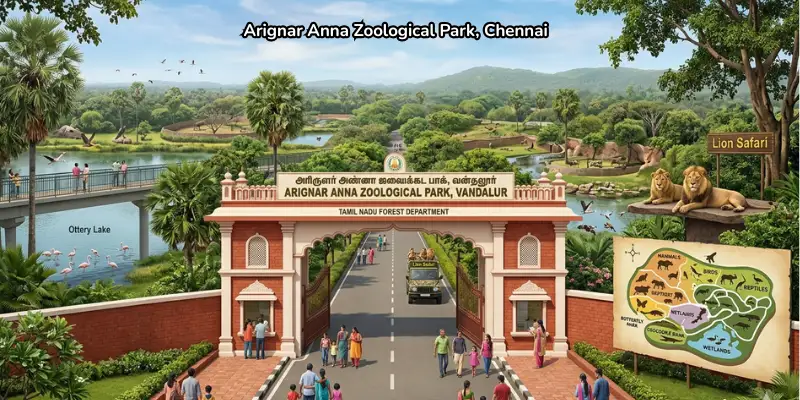
Arignar Anna Zoological Park, also known as Vandalur Zoo, is located in Chennai, Tamil Nadu. It was established in 1855 and later shifted to its current large forest area in Vandalur in 1976. Today, it is known as the largest zoo in India and one of the biggest in Asia.
This zoo was designed to create a natural, forest-like environment where animals can live in large, open spaces rather than small cages. Over time, it has become a major wildlife and education center in South India.
Why This Zoo Is So Large
This zoo is designed more like a wildlife reserve than a traditional zoo.
Key features include:
- Around 1,500 acres of total area
- Forest-based natural habitat zones
- Large safari and walking sections
- Separate enclosures for different species
- Wide open landscapes for animals
Animal Highlights
The zoo has a wide collection of Indian and exotic animals.
Visitors can see:
- Bengal tigers
- Asiatic lions
- Indian elephants
- Giraffes
- Zebras
- Deer species
- Crocodiles
- Many reptiles and birds
Safari Experience
The safari is one of the most visited parts of the zoo.
It includes:
- Lion safari in a protected zone
- Deer safari in open grasslands
- Battery vehicle rides for visitors
- Guided animal viewing routes
Best Things to Do Here
This zoo is designed for a full-day visit experience.
Main attractions include:
- Safari zones exploration
- Reptile house visit
- Butterfly park walk
- Aquarium section
- Nature picnic areas
Visitor Tips and Best Time to Go
A little planning improves the visit experience.
Tips:
- Visit early morning
- Wear comfortable shoes
- Use the safari transport inside the zoo
- Carry water during the summer
- Avoid peak afternoon heat
Best time to visit:
- November to February (pleasant weather)
Arignar Anna Zoological Park is not just India’s largest zoo but a carefully designed wildlife space where nature, conservation, and visitor experience come together in a realistic forest environment.
2. Nandankanan Zoological Park, Odisha
Nandankanan Zoological Park is located in Bhubaneswar, Odisha, near the Chandaka forest region. It was established in 1960 and later opened to the public in 1979. The zoo is famous for being built within a natural forest, making it one of the most scenic zoological parks in India.
It is also well known for its conservation work, especially for white tigers and other endangered species. The combination of forest, lake, and wildlife makes it a unique destination for nature lovers.
Why This Zoo Feels Different
This zoo is designed inside a natural forest, not a city space. That is why animals live in more open and natural conditions.
Key features include:
- Total area: around 1,084 hectares (approx. 2,683 acres)
- Forest and lake ecosystem inside the zoo
- Open safari zones instead of closed cages
- Strong focus on conservation breeding programs
- Botanical garden and natural habitat zones
Animal Highlights
Nandankanan is especially famous for its rare and endangered species.
Visitors can see:
- White tigers
- Black panthers
- Asiatic lions
- Elephants
- Crocodiles
- Deer species
- Reptiles and birds
Safari Experience
The safari is one of the main attractions of this zoo.
It includes:
- Lion safari in the forest zone
- White tiger safari
- Bear safari
- Open natural enclosures
Seeing animals in a forest-like habitat makes the safari experience very realistic.
Best Things to Do Here
This zoo offers both adventure and relaxation in nature.
Top activities include:
- Safari rides through forest zones
- Boating in the lake area
- Walking through the botanical garden
- Exploring reptile and bird sections
- Watching feeding sessions
Visitor Tips and Best Time to Go
Planning your visit helps you enjoy more.
Tips:
- Visit early morning for active animals
- Wear light and comfortable clothes
- Carry water and sun protection
- Use safari tickets in advance if possible
Best time to visit:
- October to March (cool and pleasant weather)
Nandankanan Zoological Park is more than just a zoo. It is a natural wildlife sanctuary where forest, lake, and rare animals come together to create a peaceful and educational experience for every visitor.
3. Mysore Zoo, Karnataka
Mysore Zoo, officially known as Sri Chamarajendra Zoological Gardens, is located in Mysore, Karnataka. It was established in 1892 by Maharaja Chamaraja Wadiyar. This makes it one of the oldest zoos in India.
The zoo is known for its clean environment, well-planned layout, and strong focus on animal care. Unlike many large safari-style parks, Mysore Zoo offers a more organized walking experience with beautifully maintained enclosures.
Why This Zoo Feels Special
Mysore Zoo is not the largest by land area, but it is one of the best-maintained zoos in India. It is designed for easy walking and clear animal viewing.
Key features include:
- Around 157 acres
- Well-planned walking pathways
- Clean and green environment
- Natural-style animal enclosures
- Strong conservation and breeding programs
Animal Highlights
The zoo has a wide variety of animals from around the world.
Visitors can see:
- Elephants
- Giraffes
- Zebras
- White rhinos
- Tigers
- Leopards
- Chimpanzees
- Exotic birds and reptiles
Safari and Experience
Mysore Zoo does not have a traditional jungle safari like some other large zoos, but it offers a very comfortable walking experience.
Highlights include:
- Wide walking trails through different animal zones
- Aquarium section with freshwater species
- Reptile house with snakes and crocodiles
- Bird aviary with exotic species
Best Things to Do Here
This zoo is ideal for a relaxed and educational visit.
Top activities include:
- Explore African and Asian animal zones
- Visit the reptile house
- Watch the bird aviary
- Enjoy aquarium exhibits
- Relax in shaded garden areas
Visitor Tips and Best Time to Go
Good planning makes the visit more enjoyable.
Tips:
- Visit early morning or late afternoon
- Wear comfortable walking shoes
- Carry water bottles
- Follow the zoo map for easy navigation
Best time to visit:
- October to February (cool and pleasant weather)
Mysore Zoo is a perfect example of a well-managed and peaceful wildlife park where visitors can enjoy animals in a clean, organized, and educational environment.
4. Nehru Zoological Park, Hyderabad
Nehru Zoological Park is located near Mir Alam Tank in Hyderabad, Telangana. Opened in 1963, it is one of the most famous zoological parks in South India. The zoo is especially known for its safari zones, large animal enclosures, and family-friendly wildlife experience.
Spread across around 380 acres, this zoo combines walking areas, safari routes, and natural landscapes to create a more immersive environment for both animals and visitors.
How This Zoo Creates a More Interactive Wildlife Experience
Unlike many traditional zoos with compact layouts, Nehru Zoological Park is designed with larger movement spaces and safari-based attractions.
Some of its standout features include:
- Around 380 acres of total land area
- Separate safari sections for lions, tigers, and bears
- Wide shaded walking routes across the park
- Internal toy train for easier transportation
- Natural-style enclosures with open visibility
The overall setup makes the zoo feel more spacious and engaging for visitors.
Animals That Attract the Most Visitors
The zoo has a diverse wildlife collection from India and other regions.
Popular animals include:
- Asiatic lions
- Bengal tigers
- Indian elephants
- Giraffes
- Hippopotamuses
- Crocodiles
- Sloth bears
- Exotic birds and reptiles
Large carnivore enclosures remain one of the most visited sections inside the park.
Safari Zones and Visitor Movement Inside the Park
The safari experience is one of the zoo’s biggest attractions.
Visitors can enjoy:
- Lion safari through protected forest sections
- Tiger safari routes
- Battery-operated safari vehicles
- Toy train rides covering major areas
- Long shaded paths for walking visitors
This combination helps visitors explore the large zoo more comfortably.
Things Visitors Usually Enjoy the Most
The zoo offers activities beyond standard animal viewing.
Many visitors spend time:
- Exploring reptile and nocturnal animal houses
- Watching birds in aviary sections
- Taking family photos near lake areas
- Relaxing in shaded seating zones
- Enjoying educational wildlife displays
Because of its size, most families spend several hours inside the zoo.
Best Time to Plan a Visit
Weather plays an important role in the overall experience.
Helpful suggestions:
- November to February offers the most pleasant weather
- Morning visits provide better animal activity
- Weekdays are usually less crowded
- Comfortable shoes help during long walks
Nehru Zoological Park offers a balanced mix of safari adventure, open wildlife habitats, and family-friendly exploration, making it one of the most complete zoo experiences in South India.
5. Indira Gandhi Zoological Park, Visakhapatnam
Indira Gandhi Zoological Park is located between the Eastern Ghats hills and the Bay of Bengal in Visakhapatnam, Andhra Pradesh. Established in 1977 and opened to the public in 1994, the zoo is widely known for its scenic natural surroundings and forest-like atmosphere.
Covering around 625 acres, it is one of the largest zoological parks in India. Unlike many urban zoos, this park blends directly into the surrounding hills and vegetation, creating a much more natural wildlife environment.
Why This Zoo Feels Closer to Nature Than a Traditional City Zoo
The zoo’s location is one of its biggest strengths. Instead of relying heavily on artificial structures, much of the landscape already includes forests, slopes, and greenery.
Important features include:
- Around 625 acres of land area
- Positioned between hills and the coastal region
- Large vegetation-covered animal sections
- Natural terrain pathways instead of flat city layouts
- Open surroundings with less concrete infrastructure
This setup makes the experience feel more like exploring a wildlife reserve.
Wildlife Species That Visitors Commonly Explore Here
The zoo houses animals from both Indian and international habitats.
Major attractions include:
- Bengal tigers
- Panthers
- Indian elephants
- Nilgai
- Crocodiles
- Pythons
- Ostriches
- Various parrot and bird species
The carnivore and reptile sections attract strong visitor interest throughout the year.
Outdoor Areas That Make the Visit More Scenic
The zoo experience here depends heavily on walking through different natural sections.
Visitors usually enjoy:
- Tree-covered pathways through animal zones
- Elevated viewpoints near hill sections
- Open bird enclosures with natural vegetation
- Quiet resting areas surrounded by greenery
Because the park is spread across uneven terrain, different sections feel visually distinct from one another.
Visitor Experience and Time Planning
This zoo is best explored slowly instead of rushing through exhibits.
Helpful planning ideas:
- Most visitors spend 3 to 5 hours inside
- Morning visits provide cooler walking conditions
- Carrying water is useful due to long walking distances
- Battery vehicles help cover larger sections comfortably
The natural layout also makes the zoo feel less crowded compared to compact city zoos.
Ideal Season for Visiting
Weather conditions greatly affect walking comfort in this zoo.
Best visiting period:
- October to February offers cooler temperatures
- Early morning gives better wildlife visibility
- Monsoon season adds extra greenery to the landscape
Indira Gandhi Zoological Park stands out for its hill-side forest environment and spacious natural layout, giving visitors a wildlife experience that feels far more connected to nature than a typical urban zoo.
6. National Zoological Park, Delhi
National Zoological Park, commonly known as Delhi Zoo, is located near Purana Qila in New Delhi. It was inaugurated in 1959 and remains one of the most visited zoos in India because of its central location and large collection of animals.
Spread across nearly 176 acres, the zoo was planned as a modern zoological park with wide roads, water bodies, and organized animal sections. Its location in the heart of the capital city makes it one of the easiest wildlife attractions to access for both tourists and local families.
What Makes This Zoo Important in India’s Capital
Delhi Zoo is designed differently from many forest-style zoological parks. Its layout focuses on organized viewing spaces and educational wildlife exposure within an urban setting.
Some of its major features include:
- Around 176 acres of landscaped area
- Large lakes and green open sections
- Separate zones for mammals, reptiles, and birds
- Broad walking roads with shaded trees
- One of the oldest modern zoos in India
Its balanced mix of greenery and structured planning makes navigation easier for visitors.
Famous Animals Visitors Usually Look For
The zoo is home to a wide range of Indian and international species.
Popular attractions include:
- White tigers
- Royal Bengal tigers
- Asiatic lions
- Indian rhinoceros
- Hippopotamuses
- Jaguars
- Crocodiles
- Exotic birds
The white tiger enclosure remains one of the most photographed areas inside the zoo.
Areas That Keep Visitors Engaged During the Visit
The zoo is spread out in a circular-style route, allowing visitors to explore continuously without confusion.
Many people enjoy:
- Walking beside lake areas with water birds
- Visiting reptile and amphibian houses
- Exploring shaded animal corridors
- Watching large herbivore enclosures from viewing points
The quieter green sections also make the visit more relaxing compared to crowded amusement attractions.
Visitor Planning and Crowd Expectations
Because of its location in Delhi, visitor numbers can become very high on holidays and weekends.
Useful planning tips:
- Morning entry helps avoid heavy crowds
- Winter months provide more comfortable walking weather
- Weekdays usually feel less busy
- Carrying hats and water is useful during warmer months
Most visitors spend around 2 to 4 hours exploring the zoo comfortably.
Best Season to Visit
Climate conditions strongly affect the experience here.
Recommended visiting period:
- October to March offers pleasant temperatures
- Foggy winter mornings sometimes reduce visibility slightly
- Summers can become very hot by midday
National Zoological Park combines wildlife, greenery, and historical surroundings in the center of India’s capital, creating an accessible and educational zoo experience for visitors of all ages.
7. Alipore Zoological Gardens, Kolkata
Alipore Zoological Gardens is located in Kolkata, West Bengal. It was established in 1876 and is widely recognized as one of the oldest zoological parks in India. The zoo is situated in a central urban area, making it one of the most accessible wildlife attractions in the city.
Covering around 46 acres, it is a compact but historically important zoo that focuses on classic animal exhibits and heritage-style zoo planning rather than large safari landscapes.
What Makes This Zoo Historically Important in Kolkata
This zoo reflects traditional zoological design from the colonial period, with well-defined animal sections and a structured city-park layout.
Key characteristics include:
- Around 46 acres of city-based zoo space
- Established in the late 19th century (1876)
- Traditional enclosure-based animal display system
- Strong focus on heritage and conservation history
- Located within a busy metropolitan area
The overall setup gives it a classic old-style zoo identity rather than a modern safari experience.
Key Wildlife Species Found Here
Despite its smaller area, the zoo houses a notable variety of animals.
Visitors commonly see:
- Royal Bengal tigers
- Asiatic lions
- Leopards
- Indian elephants
- Hippopotamuses
- Crocodiles
- Various primates
- Exotic bird species
Main Visitor Areas Inside the Zoo
The zoo is organized into clearly separated animal zones, making it easy to explore.
Popular sections include:
- Big cat enclosures
- Reptile house with snakes and crocodiles
- Bird aviary and water bird ponds
- Elephant and herbivore sections
- Shaded walking corridors between exhibits
Each section is relatively close, so visitors can cover the zoo in a shorter time compared to large wildlife parks.
Visitor Experience and Time Planning
Due to its compact layout, the zoo is suitable for short city visits.
Useful points for visitors:
- Most people complete the visit in 2 to 3 hours
- Weekdays are generally less crowded
- Winter months provide the most comfortable weather
- Walking routes are short and easy to navigate
Best Time to Visit
Seasonal timing improves the overall experience.
Recommended period:
- November to February for pleasant weather
- Early mornings for better animal visibility
- Avoid peak summer afternoons due to humidity
Alipore Zoological Gardens offers a historic and easy-to-explore wildlife experience in the heart of Kolkata, combining heritage value with a simple yet diverse collection of animals.
8. Sakkarbaug Zoological Park, Gujarat
Sakkarbaug Zoological Park is located in Junagadh, Gujarat. It was established in 1863 and is considered one of the oldest zoos in India. The zoo is historically significant because it was originally developed during the princely state era and later became an important center for wildlife conservation in western India.
Spread across around 200 hectares (about 494 acres), it is especially known for its role in Asiatic lion breeding programs, making it an important part of India’s wildlife protection efforts.
Why This Zoo Plays an Important Role in Wildlife Conservation
This zoo is not only about public viewing but also focuses strongly on breeding and conservation, especially for endangered species.
Key features include:
- Around 200 hectares of protected zoo land
- One of the oldest active zoos in India (1863)
- Major Asiatic lion breeding center
- Large open enclosure system for big cats
- Research and wildlife conservation programs
The zoo is widely respected for its efforts to protect and increase the Asiatic lion population.
Wildlife You Can Commonly See Here
The zoo has a balanced mix of native and exotic species.
Visitors can observe:
- Asiatic lions
- Leopards
- Striped hyenas
- Deer species
- Antelopes
- Crocodiles
- Wolves
- Various birds and reptiles
Big cat enclosures are the most prominent attraction here.
Key Areas Inside the Zoo
The zoo is structured into different animal and breeding zones.
Main sections include:
- Lion breeding and conservation area
- Herbivore grazing enclosures
- Reptile house with crocodiles and snakes
- Bird collection zones
- Open safari-style big cat sections
The layout focuses more on animal care and breeding than on entertainment-style attractions.
Visitor Experience and Movement Inside the Park
This zoo is more educational and conservation-focused than entertainment-heavy.
Visitor notes:
- Ideal for short to medium visits (2–3 hours)
- Less commercial crowd compared to big metro zoos
- Simple walking routes across major sections
Best Time to Visit
Weather plays an important role in comfort.
Recommended season:
- October to February for mild weather
- Morning hours are best for animal activity
- Summers can feel dry and hot in the Junagadh region
Sakkarbaug Zoological Park is a historically rich and conservation-focused zoo that plays a key role in protecting India’s Asiatic lion population while offering visitors a simple and educational wildlife experience.
9. Padmaja Naidu Himalayan Zoological Park, Darjeeling
Padmaja Naidu Himalayan Zoological Park is located in Darjeeling, West Bengal, in the lap of the Eastern Himalayas. It was established in 1958 and is India’s largest high-altitude zoo. The zoo is internationally recognized for its conservation programs focused on cold-climate Himalayan wildlife species.
Spread across 67 acres, the zoo is built on a steep, mountainous slope, which makes its layout very different from that of typical flat or safari-style zoos.
Why This Zoo Is Unique in India’s Mountain Region
This zoo is specially designed for cold-climate animals and Himalayan terrain conditions, which makes it very different from most zoos in India.
Key features include:
- Around 67 acres of hill-based terrain
- High-altitude location in the Darjeeling hills
- Specialized breeding center for endangered Himalayan species
- Natural mountain slope enclosures
- Focus on conservation of cold-region wildlife
The entire structure is built to match the natural habitat of mountain animals.
Wildlife Found in Cold Himalayan Climate
The zoo is famous for rare and endangered species that survive in cold environments.
Visitors can see:
- Snow leopards
- Red pandas
- Himalayan wolves
- Tibetan wolves
- Himalayan black bears
- Satyr tragopan (bird species)
- Various mountain birds
The snow leopard and red panda sections are the most popular among visitors.
Key Areas Inside the Zoo
Because of its hilly terrain, the zoo is divided into altitude-based zones.
Main sections include:
- Snow leopard breeding center
- Red panda conservation zone
- Himalayan black bear enclosure
- High-altitude bird aviary
- Natural forest walking trails
The elevation-based layout makes the experience physically active but visually rewarding.
Visitor Experience and Walking Conditions
This zoo requires more physical effort than flat zoos due to its steep slopes.
Visitor notes:
- Expect uphill and downhill walking paths
- Visits usually take 2 to 4 hours
- Viewing points offer Himalayan mountain scenery
- Comfortable shoes are essential for movement
Best Time to Visit
The weather in the mountains affects accessibility and visibility.
Recommended season:
- March to June for clear mountain views
- October to December for cold-weather animals
- The monsoon season can make paths slippery
Padmaja Naidu Himalayan Zoological Park offers a rare mountain wildlife experience in India, focusing on endangered Himalayan species in a natural cold-climate environment surrounded by the scenic beauty of the Darjeeling hills.
10. Kamla Nehru Zoological Garden, Ahmedabad
Kamla Nehru Zoological Garden is located in Ahmedabad, Gujarat, near the Kankaria Lake area. It was established in 1951 and is one of the well-known urban zoos in western India. The zoo is designed as part of a larger recreational complex, making it a popular weekend destination for families and local visitors.
Spread across 117 acres, it offers a balanced mix of animal enclosures, lake surroundings, and recreational spaces within the city.
How This Zoo Fits Into an Urban Recreational Setting
Unlike forest-based or safari-style zoos, this zoo is built within a city leisure zone, which makes it easy to access and explore.
Key features include:
- Around 117 acres of planned zoo area
- Located beside Kankaria Lake
- City-based recreational zoo design
- Separate zones for mammals, reptiles, and birds
- Easy connectivity within Ahmedabad
The layout is more structured and visitor-friendly for short visits.
Wildlife Species Commonly Seen Here
The zoo hosts a wide variety of Indian and some exotic animals.
Visitors usually see:
- Lions
- Tigers
- Leopards
- Deer species
- Hippopotamuses
- Crocodiles
- Peacocks and exotic birds
- Various reptiles
Big cats and lake-adjacent animal enclosures are key highlights.
Major Sections Inside the Zoo
The zoo is divided into well-organized animal and leisure zones.
Important areas include:
- Lion and tiger enclosures
- Reptile house with snakes and crocodiles
- Bird aviary section
- Herbivore and deer zones
- Lake-facing animal exhibits near Kankaria
The combination of zoo and lake views makes it visually appealing.
Visitor Experience and Duration
This zoo is suitable for short, relaxed visits rather than full-day exploration.
Visitor notes:
- Most visits take 2 to 3 hours
- Weekends can be crowded due to lake tourism
- Walking routes are simple and easy
- Ideal for families with children
Best Time to Visit
Weather plays an important role in comfort.
Recommended season:
- October to February for pleasant conditions
- Early mornings for a better viewing experience
- Evening visits are also popular due to the lake’s surroundings
Kamla Nehru Zoological Garden offers a convenient city-based wildlife experience in Ahmedabad, combining animal exhibits with lake-side recreation, making it ideal for short family outings and casual visits.
Conclusion
So guys, I hope you have clearly understood the largest zoos in India and what makes each of them special. India is home to some of the most diverse and fascinating wildlife parks in Asia, each offering a unique mix of nature, wildlife, and adventure.
From massive forest-based safari parks to historic zoological gardens, each zoo gives a different experience for animal lovers, families, photographers, and nature travelers. Whether you want to explore the biggest zoo in India, enjoy a thrilling safari, or see rare wildlife species up close, these zoos offer much more than a simple day trip.
My personal recommendation is to visit Arignar Anna Zoological Park for the largest and most complete wildlife experience, while Bannerghatta Biological Park is perfect for safari lovers and families looking for adventure near Bengaluru. No matter which zoo you choose, these destinations help you connect with nature, wildlife conservation, and India’s rich biodiversity in a memorable way.
If you love wildlife travel, you can also explore our guide on the largest aquariums in the world for more amazing marine life destinations
FAQs about the world’s largest zoo in India
Arignar Anna Zoological Park in Chennai is the 1st largest zoo in India. It covers around 1,490 acres and offers a wide range of wildlife in natural-style habitats.
Nandankanan Zoological Park in Odisha is the 2nd largest zoo in India. It is spread over a large forest and lake area and is famous for its white tiger breeding program.
Sri Venkateswara Zoological Park in Tirupati is considered the 3rd largest zoo in India. It is built on hilly forest land and focuses mainly on Indian wildlife species.
Indira Gandhi Zoological Park in Visakhapatnam is often listed among the 4th largest zoos in India. It is located inside a forest reserve and offers a natural habitat experience for animals.
Alipore Zoological Garden in Kolkata is the oldest zoo in India. The British established it in 1876, and it remains one of the country’s most famous zoological parks.



- Be Respectful
- Stay Relevant
- Stay Positive
- True Feedback
- Encourage Discussion
- Avoid Spamming
- No Fake News
- Don't Copy-Paste
- No Personal Attacks
- Be Respectful
- Stay Relevant
- Stay Positive
- True Feedback
- Encourage Discussion
- Avoid Spamming
- No Fake News
- Don't Copy-Paste
- No Personal Attacks
